Being told you need a root canal can feel unsettling, but modern endodontic care is focused on comfort, precision, and preserving your natural tooth whenever possible. A root canal is a targeted treatment that removes diseased tissue from inside the tooth, halts infection, and restores function so you can chew and smile without ongoing pain. In many cases it is the most conservative way to protect your long-term oral health.
At East Coast Endodontics, Inc, we combine clinical experience with contemporary instruments and techniques to make root canal therapy predictable and as comfortable as possible. Our goal is to give each patient clear information, tailored care, and the reassurance that their treatment plan supports lasting oral health.
Keeping a natural tooth maintains the integrity of your bite, preserves the jawbone, and contributes to the overall balance of your mouth. When a tooth is removed instead of treated, neighboring teeth can shift, chewing function can change, and additional restorative work may become necessary. Root canal therapy is designed to rescue a tooth that would otherwise be lost to decay, trauma, or infection.
Success rates for modern root canal treatment are high when performed with careful diagnosis and technique. That means many treated teeth go on to serve their owners for decades. Saving the tooth also often simplifies future dental care compared with the alternatives, since a treated tooth can be restored and protected with a crown or other restoration that restores strength and appearance.
Deciding between treatment and extraction is a clinical judgment that weighs the health of the tooth, the amount of remaining structure, and the condition of the surrounding bone and gum tissues. We consider these factors carefully and recommend treatment plans that emphasize tooth preservation whenever it is in the patient’s best interest.

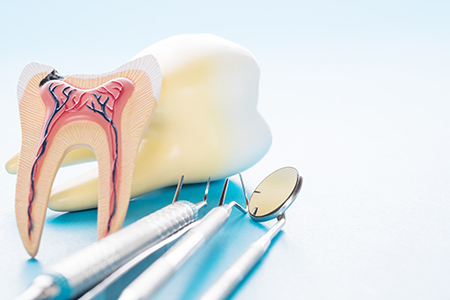
At the center of each tooth is the dental pulp: a soft network of nerves, blood vessels, and connective tissue. This tissue helps teeth develop and provides sensory feedback, but it can become inflamed or infected if bacteria penetrate through deep decay, fractures, or traumatic injury. Once the pulp is irreversibly damaged, leaving it untreated can lead to persistent pain or the spread of infection.
People often first notice trouble through lingering sensitivity to hot or cold, discomfort when biting, or a dull ache that refuses to subside. In some cases a tooth can darken after an injury, or swelling may appear near the gumline. Other times, early problems are detected only on X-rays during a routine exam — which is why regular dental visits are important even when teeth feel fine.
Common warning signs that should prompt a prompt evaluation include persistent or severe tooth pain, heightened temperature sensitivity, discomfort when touching or biting down on a tooth, visible discoloration, chips or cracks that expose the inner tooth, swelling of the gum tissues, and any unexpected mobility. These symptoms deserve timely assessment so that appropriate, tooth-preserving care can be planned.
When a toothache persists despite home remedies, it can indicate that the inner tissues are infected or inflamed. Patients commonly report pain that interferes with sleep or daily activities, which is a clear signal to seek professional attention.
A tooth that reacts strongly to temperature changes — especially when the sensation lingers after the stimulus is removed — often reflects nerve irritation or pulp disease.
Pain when chewing or when the tooth is tapped may mean the pulp or surrounding tissues are compromised, sometimes signaling the presence of an abscess or deep structural injury.
Internal discoloration can be a clue that the blood supply and nerve tissue have been affected by trauma or long-standing infection.
Breaks in enamel allow bacteria to reach deeper tissues quickly; a tooth that is fractured may require endodontic treatment to remove damaged pulp and prevent infection.
Localized puffiness or a recurring sore spot can indicate an underlying infection that needs to be addressed to protect oral and overall health.
Infections that affect the supporting bone can reduce stability. Treating the source of infection can often allow healing and restoration of function.

Addressing pulp disease or infection early typically reduces the complexity of treatment and the risk of complications. When care is delayed, infections can spread, surrounding bone can be lost, and symptoms may intensify. Timely endodontic treatment preserves options — in many cases allowing the tooth to be restored predictably with a crown rather than removed and replaced.
Even teeth that are not currently painful can harbor problems visible on X-rays, such as areas of bone loss around the root tip. Finding these issues early gives you and your clinician the best chance of saving the tooth with minimal interruption to your lifestyle and the greatest likelihood of long-term success.
When we recommend root canal therapy, we’ll explain the reasons clearly, outline expected steps, and discuss the restoration needed afterward to protect the tooth. That collaborative approach ensures you understand the rationale for treatment and what to expect during recovery.
Root canal therapy is performed with magnification, precision instruments, and materials designed for biocompatibility and seal. Treatment begins with a careful evaluation and local anesthesia to ensure comfort. The tooth is isolated, the pulp chamber is accessed, and diseased tissue is gently removed from the canals inside the root.
After cleaning and shaping the canal system, the spaces are disinfected and filled with a stable, inert material that prevents reinfection. Some treatments can be completed in a single visit, while others — especially when infection is present — may be staged to allow medication to work before final obturation. The number of canals and the tooth’s anatomy help determine the timeline.
Following the endodontic phase, a protective restoration is essential. Often a crown is recommended to restore strength and function. Your restorative dentist will coordinate with us to ensure the final outcome is durable and esthetic, allowing you to rely on the treated tooth for years to come.
After treatment many patients notice immediate relief from the intense pain that brought them in. Mild soreness or sensitivity around the tooth for a few days is common as surrounding tissues heal. Over-the-counter pain relievers are usually effective; when stronger medication is needed we provide appropriate prescriptions based on the clinical situation.
Protecting the treated tooth while it awaits a permanent restoration is important. Temporary fillings are not as strong as final crowns, so avoiding hard, sticky foods and favoring the opposite side of the mouth can reduce the chance of fracture. Maintaining excellent oral hygiene and attending follow-up appointments support healing and long-term success.
With proper treatment and restoration, a root canal-treated tooth can remain functional for many years — often a lifetime. If symptoms such as increasing pain, swelling, or unusual drainage appear after treatment, prompt evaluation helps us address concerns quickly and preserve oral health.
We are committed to providing clear explanations and careful care tailored to each patient’s needs. If you have questions about root canal therapy or believe you may need evaluation, please contact our office for more information.
A root canal is a focused endodontic procedure that removes inflamed or infected pulp from inside a tooth to stop pain and prevent the spread of infection. The treatment preserves the remaining tooth structure and allows the tooth to continue functioning for chewing and speaking. Modern root canal therapy uses magnification and specialized instruments to clean, shape, disinfect, and seal the tooth’s internal canal system.
After the canal system is filled with a stable, biocompatible material, the tooth typically requires a protective restoration such as a crown to restore strength and appearance. Some cases are completed in a single visit while others may be staged if infection control or medicated dressings are needed. With careful diagnosis and technique, many treated teeth remain functional for decades.
Preserving a natural tooth maintains the integrity of your bite and helps prevent neighboring teeth from shifting, which can alter chewing function and lead to additional dental work. Keeping the tooth also supports the underlying jawbone and contributes to long-term oral balance and health. In many cases, a saved tooth avoids the need for more complex restorative procedures later on.
Root canal therapy is often the most conservative option when the pulp is diseased but the tooth structure is salvageable. Successful endodontic treatment combined with an appropriate crown or restoration can restore strength and esthetics, allowing the tooth to serve the patient for many years. Clinicians evaluate the amount of remaining structure, surrounding bone, and gum health when recommending treatment to emphasize preservation whenever appropriate.
Common warning signs include lingering sensitivity to hot or cold, persistent or severe tooth pain, and discomfort when biting or touching a tooth. Other indicators are visible darkening of a tooth after trauma, swelling near the gumline, persistent drainage, or a loose-feeling tooth, any of which warrant prompt evaluation. Some problems are discovered only on X-rays during routine exams, underscoring the value of regular dental visits even when teeth feel normal.
Because symptoms can vary, it is important to seek assessment if you notice changes in sensation, appearance, or function of a tooth. Early diagnosis typically reduces treatment complexity and improves the likelihood of saving the tooth. Your clinician will combine clinical findings and radiographs to determine whether root canal therapy or another approach is most appropriate.
Treatment begins with a careful evaluation and local anesthesia to ensure the tooth and surrounding tissues are comfortable. The tooth is isolated, an access opening is made, and diseased pulp is removed from the root canals with precision instruments under magnification. The canal spaces are cleaned, shaped, disinfected, and then filled with a biocompatible material to prevent reinfection.
Depending on the infection and tooth anatomy, some cases are completed in one visit while others require a temporary dressing and a follow-up appointment before final obturation. After the endodontic phase, a restorative dentist will typically place a crown or similar restoration to protect the tooth and restore full function. Coordination between the endodontist and the restorative dentist helps achieve a durable, esthetic outcome.
With modern anesthesia techniques and careful handling, most patients experience minimal discomfort during the procedure, and many report immediate relief from the acute pain that brought them in. Local anesthesia numbs the tooth and surrounding area so the treatment itself is generally comfortable. Some mild soreness or sensitivity for a few days after the appointment is common as surrounding tissues heal.
Over-the-counter pain relievers are usually sufficient to manage post-procedure soreness, and when stronger medication is clinically indicated, the clinician prescribes appropriate options. Following the provided aftercare instructions and avoiding hard or sticky foods while the tooth awaits permanent restoration helps reduce the chance of complications. If increasing pain, swelling, or unusual symptoms occur after treatment, prompt reevaluation is recommended.
After treatment, it is important to protect the tooth until a final restoration is in place; temporary fillings and provisional crowns are not as strong as permanent restorations. Patients should avoid chewing hard or sticky foods on the treated side and maintain excellent oral hygiene, including brushing and flossing, to support healing of the surrounding tissues. Follow-up appointments are scheduled to monitor healing and to place the definitive crown or restoration when appropriate.
If you experience persistent pain, swelling, or drainage after treatment, contact your clinician promptly for reassessment. Long-term success depends on both the quality of the endodontic procedure and the final restorative work, so coordinating care between your endodontist and restorative dentist is important. Regular dental checkups and radiographic evaluations help ensure the tooth remains healthy over time.
Retreatment is considered when a previously treated tooth develops new or persistent symptoms, radiographic signs of infection, or when restorative issues allow bacteria to re-enter the canal system. Complex anatomy, missed canals, or deterioration of the restoration can contribute to failure and may require a second endodontic procedure to correct the problem. In some cases a nonsurgical retreatment resolves the issue by removing prior filling materials, re-cleaning the canals, and placing a new seal.
Surgical options, such as an apicoectomy, are appropriate when retreatment is unlikely to reach the problematic area or when anatomical considerations make nonsurgical correction impractical. Surgery addresses infected tissue at the root tip and can preserve a tooth that might otherwise be lost. An individualized evaluation determines whether retreatment, surgery, or another approach offers the best chance of long-term success.
With proper endodontic technique, quality restoration, and good oral hygiene, many root canal-treated teeth remain functional for decades and often for a lifetime. Success rates are high when treatment is performed with careful diagnosis, thorough cleaning and sealing of the canals, and an appropriate crown or restoration placed afterward. The condition of the remaining tooth structure and the health of surrounding bone and gum tissues influence long-term prognosis.
Regular dental checkups and radiographs help monitor the treated tooth and address restorative maintenance as needed. Avoiding habits that place excessive stress on teeth, such as chewing very hard objects, and treating new dental problems early both support the longevity of a treated tooth. If symptoms recur, prompt evaluation can identify treatable causes and preserve oral health.
During an initial assessment the clinician takes a thorough history, performs a clinical exam, and typically uses diagnostic imaging to evaluate the tooth and surrounding tissues. Tests may include percussion, bite assessment, and sensitivity checks to help determine the extent of pulp involvement and any periapical changes. The clinician discusses findings, explains whether root canal therapy or another treatment is indicated, and outlines the expected steps in the procedure.
We emphasize clear communication so patients understand the rationale for recommended care and what to expect during recovery. If root canal therapy is planned, the team explains the timeline, whether one or more visits are likely, and the restoration needed afterward to protect the tooth. Coordination with your referring or restorative dentist ensures a seamless transition to final restoration when treatment is complete.
Endodontic care focuses specifically on the diagnosis and treatment of the dental pulp and root canal system using specialized instruments, magnification, and techniques that optimize cleaning and sealing of the canals. While general dentists may perform routine endodontic procedures, an endodontist brings additional training and experience in complex anatomy, difficult cases, and advanced methods such as microsurgery. This focused expertise increases the predictability of treatment in challenging situations.
At our Daytona Beach practice we combine clinical experience with contemporary instruments and patient-centered communication to make treatment as comfortable and understandable as possible. We collaborate closely with restorative dentists to ensure the treated tooth receives the protective restoration it needs for long-term function and esthetics. Patients can expect careful diagnosis, individualized treatment planning, and follow-up to support durable outcomes.